
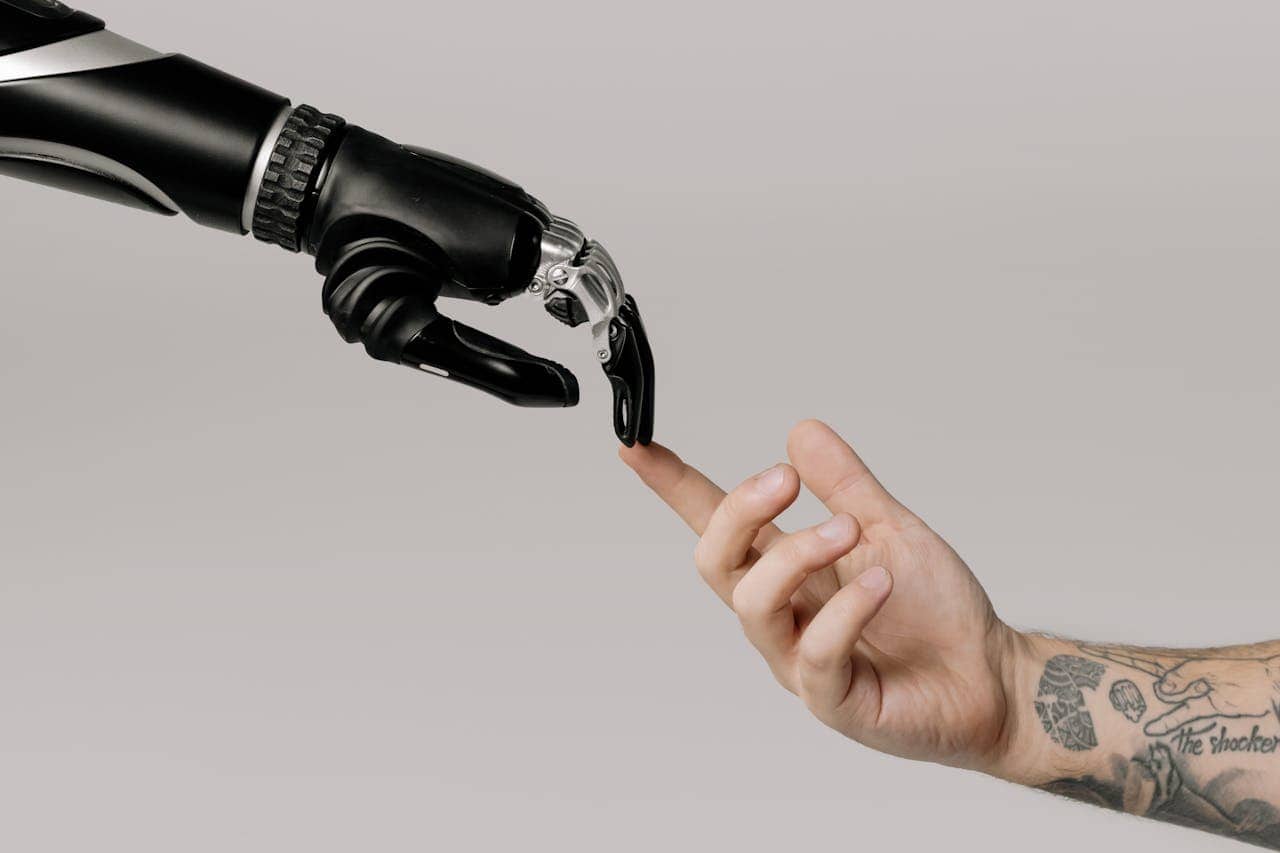

AI Tools as a Complement to My Day-to-Day Job
In today’s fast-paced world, technology plays a crucial role in enhancing productivity and efficiency. Artificial Intelligence (AI) tools, in particular, have revolutionized the way we work, offering innovative solutions to streamline tasks and improve outcomes. As a programmer, office worker, or in various other roles, integrating AI tools into your daily routine can significantly boost your performance. Here are links to some of the most popular AI tools:

ChatGPT is a chatbot developed by OpenAI and launched on November 30, 2022. Based on a large language model, it enables users to refine and steer a conversation towards a desired length, format, style, level of detail, and language.

DALL·E is text-to-image models developed by OpenAI using deep learning methodologies to generate digital images from natural language descriptions, called “prompts.”

Gemini, formerly known as Bard, is a generative artificial intelligence chatbot developed by Google. Based on the large language model (LLM) of the same name and developed as a direct response to the meteoric rise of OpenAI’s ChatGPT

The definition of Leonardo.ai is that of an “AI art generator.” As part of this focus, it offers users a diverse range of image creation and editing capabilities. Image Generation: Generate multiple high-resolution images at once with text or image input.
On this post, lets focus on prompts (or “questions”) that can be useful on ChatGPT and Gemini that could make your life and work easier. Here are some classic examples where AI can be used in day-to-day tasks. Keep in mind that, the more specific, the better.
1. Code Optimization and Bug Detection
AI-powered tools can analyze code to identify potential bugs and suggest optimizations, helping programmers write cleaner, more efficient code.
Prompt: Write a snippet of code in javascript that counts down from 10 to 0 each 2 seconds

2. Personalized Email Campaigns
For office workers, AI can analyze customer data to create personalized email campaigns, increasing engagement and conversion rates.
Prompt: Help me create a SEO marketing strategy for a kids party place to appear on top of search results. Suggest the best keywords used in Sonora, México.

3. Data Analysis and Visualization
AI can quickly analyze large datasets and generate insightful visualizations, enabling professionals to make data-driven decisions.
Prompt: Show me a list of the 10 most secure countries of the world based on the Global Peace Index
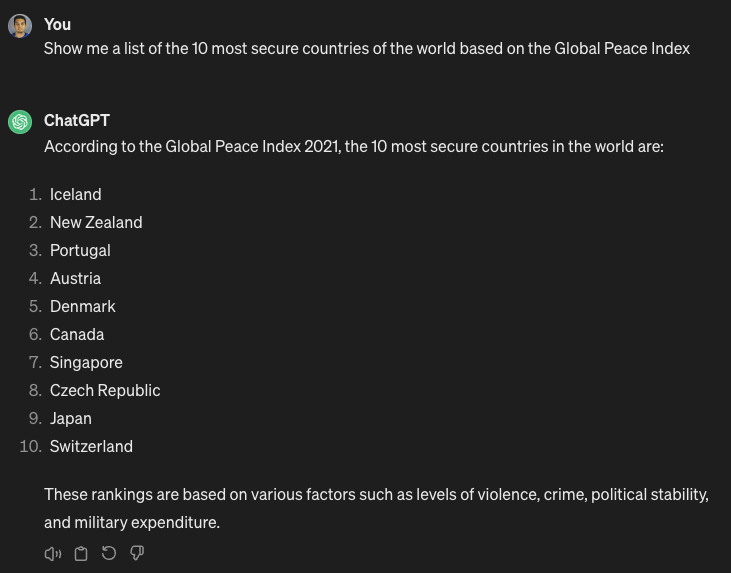
Image Generation

Important things to consider when using AI tools
Fact-Checking and Validation
Even though AI can analyze data at a scale beyond human capability, it’s crucial for users to fact-check the results. AI tools can inadvertently propagate inaccuracies or misinterpret data, leading to incorrect conclusions if not carefully verified. Also, some tools have limited data and may not be up to date.
Ethical Considerations
AI tools can also raise ethical concerns, such as privacy issues, bias in decision-making, and the potential impact on employment. It’s essential for users to be aware of these issues and address them responsibly.
Continuous Learning and Adaptation
AI technology is rapidly evolving, and users must stay updated with the latest advancements and best practices to harness its full potential. Continuous learning and adaptation are key to maximizing the benefits of AI tools.
By acknowledging the limitations of AI and maintaining a critical mindset, users can harness its power while mitigating potential risks. Remember, AI is a tool to enhance human capabilities, not a substitute for human judgment and discernment. How do you ensure the accuracy and ethical use of AI in your work? Share your insights and strategies in the comments below.


